Prompt Structure and Examples
Use these formulas as starting points. Remove any bracket that does not matter, and replace every bracket you keep with a real choice.
Easy Song Description formula
A [mood] [genre] song at [tempo or rhythmic feel], with [main instruments], [vocal type and delivery], about [topic], moving from [opening] to [development], ending with [ending]. [Production direction].
Short idea:
A hopeful song about finding your way home.
More useful version:
Hopeful cinematic folk at a slow tempo, fingerpicked guitar, brushed drums and distant strings, intimate English male vocal about finding the way home, sparse opening that grows into layered harmonies, ending on one warm sustained chord.
The second version keeps the same idea but makes the sound easier to understand.
Custom Style formula
[main genre], [mood], [tempo/rhythm], [drums and bass], [main instruments], [vocal direction], [verse-to-chorus change], [production and ending]
Example:
Neo-soul, relaxed and warm, laid-back pocket, brushed drums and round melodic bass, Rhodes and muted guitar, smoky female lead with close harmonies, restrained verse and fuller chorus, warm natural mix.
Possible Exclude styles:
aggressive distortion, shouted vocals, large electronic drop, over-compressed mix
Keep exact song words in Lyrics. Style should describe how those words are performed.
Example: electronic pop with vocals
Song Description
Confident electronic pop at 118 BPM, punchy dry drums, rounded synth bass and bright arpeggiators, expressive female lead with rhythmic backing-vocal replies, compact verses building into a wide final chorus, clean modern mix and decisive ending.
Custom Style
Electronic pop, confident energy, 118 BPM, punchy dry kick and snare, rounded synth bass, bright arpeggiators, expressive female lead, rhythmic backing vocals, compact verse, wide final chorus, clean modern mix.
Exclude styles
rock guitars, orchestral strings, lo-fi noise, spoken verse
Example: quiet acoustic song
Intimate acoustic folk ballad, 76 BPM, fingerpicked guitar and soft upright bass, light brushed percussion after the first verse, close clear male vocal, gentle verse and memorable chorus without a large build, warm room sound, natural ending.
If the result becomes too full, remove upright bass and percussion before changing the whole prompt.
Example: cinematic instrumental
Slow-building cinematic instrumental at 72 BPM, felt-piano motif, low strings and soft brass, sparse frame drum entering after the opening, harmony gradually widening toward one broad final peak, long natural tail.
In Custom, turn on Instrumental and put this text in Style.
Example: make a beat without vocals
Turn on Instrumental, then write the beat in this order:
[tempo] → [genre] → [rhythm] → [drums and bass] → [main instrument] → [mood] → [structure]
Beginner version:
90 BPM hip-hop beat, deep kick, crisp snare, warm bass, minimal melody.
More detailed version:
92 BPM hip-hop instrumental, steady half-time groove, deep kick, crisp dry snare and warm sub bass, minimal piano loop, dark focused mood, short intro, clean transitions and a firm ending.
The longer version is not automatically better. It is useful because every added phrase controls something you can hear: pace, groove, drum sound, melody, mood, or structure.
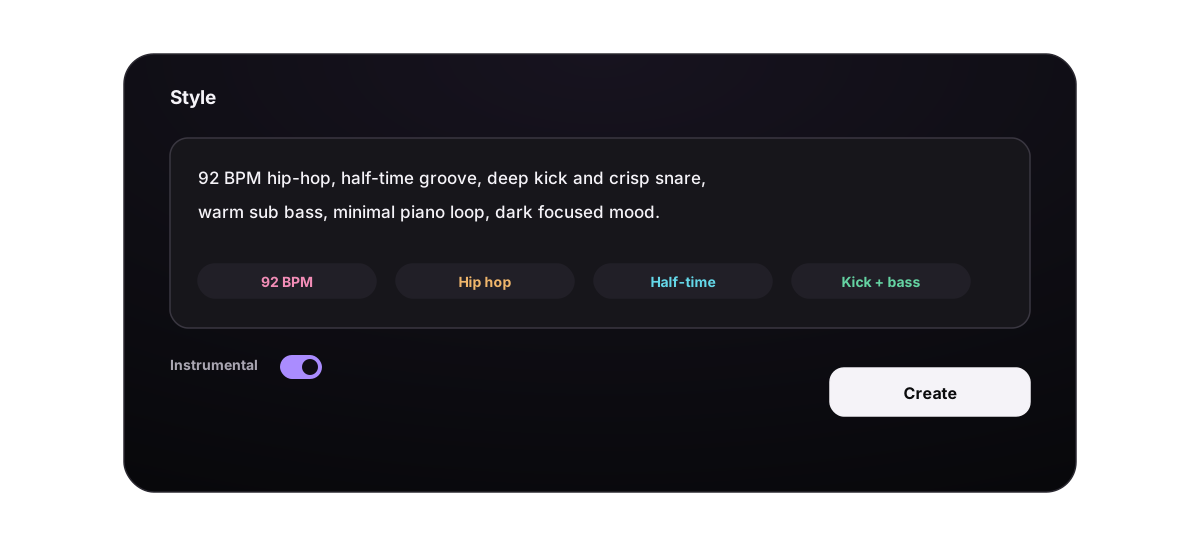
When reviewing a beat, listen for a stable groove, a clear main loop, usable section changes, and a clean ending. If only the transition is weak, change the structure phrase instead of replacing the genre and instruments.
Quick examples for different goals
| Goal | Prompt starter |
|---|---|
| Bright pop song | Bright dance-pop, 122 BPM, tight drums, elastic bass, playful synth hooks, clear female lead, large final chorus |
| Late-night R&B | Slow alternative R&B, deep pocket, soft electronic drums, warm sub bass, intimate male lead, spacious mix |
| Lo-fi study beat | 78 BPM lo-fi hip-hop instrumental, dusty drums, soft Rhodes, muted bass, gentle loop, no dramatic drop |
| Live jazz trio | Relaxed jazz trio, brushed drums, upright bass, warm piano, small-room sound, natural ending |
| Tense film cue | Low cinematic pulse, minor-key strings, distant brass, gradual rise, restrained peak, long dark tail |
| Acoustic demo | Simple acoustic folk, fingerpicked guitar, close dry vocal, light hand percussion, honest unpolished room sound |
Use these as starting points, not fixed recipes. Replace the details that define your song.
More copy-ready song examples
Each example has one clear musical identity. Copy one, then replace the subject, voice, instruments, or section change that matters to you.
Rhythm-led examples
Slow 6/8 soul ballad
Slow 6/8 soul ballad, sparse piano and warm bass, soft brushed drums, intimate male vocal, verses with plenty of space, gradually building into a powerful final chorus, warm natural room sound and a gentle ending.
Funk with off-beat accents
108 BPM funk, tight bass groove with playful off-beat accents, dry drums with a strong main beat, short rhythm-guitar notes, brass phrases that answer one another, energetic female lead, brief breakdown and a sharp final hit.
Small jazz club swing
Relaxed medium jazz rhythm, brushed drums, steady upright bass and warm piano, smoky close vocal, short instrumental exchanges between phrases, natural small-club sound, no large pop chorus.
Cinematic folk in 3/4
Reflective cinematic folk in 3/4, fingerpicked acoustic guitar, soft cello counterline and distant vocal harmonies, intimate first verse, strings entering in the second chorus, broad final refrain and one sustained closing chord.
Dynamics and structure examples
Electronic build and drop
124 BPM melodic house, muted percussion and rippling synth notes in the intro, steady dance beat, tension rising before the chorus, full bass and bright lead entering at the drop, short breakdown, clean ending for mixing.
Sparse verse to dense chorus
Dark alternative pop, dry close vocal over sparse piano in the verse, low bass and restrained pulse entering before the chorus, dense layered guitars and stacked harmonies in the final chorus, then a gradually softer ending.
Tension and resolution
Dark orchestral piece, repeating low strings and rapidly repeating violins, tense brass accents, layered percussion building toward one dramatic peak, then settling into a warm final chord with a long natural ending.
Voice and production examples
Light high-vocal R&B
Late-night alternative R&B, 76 BPM relaxed rhythm, soft electronic drums, rounded low bass and muted guitar, breathy high voice in the verses, short soulful vocal runs at phrase endings, wider harmonies in the chorus, subtle repeated echoes and a warm roomy sound.
A cappella call and response
Modern a cappella soul, confident lead vocal answered by a small mixed choir, finger snaps and vocal bass for rhythm, close harmonies in the verse, rising call and response in the bridge, full final chord with no instruments.
Spacious ambient instrumental
Slow ambient instrumental, soft sustained synths, distant piano notes and shimmering rippling patterns, very sparse rhythm, gradual layering without a beat drop, wide space, long concert-hall sound and a slow fade out.
One idea at three levels of detail
Too vague
Make a beautiful professional love song.
This says what you hope to feel, but not what the song should sound like.
Useful and focused
Warm mid-tempo indie pop about choosing to stay, live drums, melodic bass and bright guitar, intimate female verse opening into a hopeful chorus with group harmonies, clean natural ending.
Every phrase controls something audible: pace, genre, topic, instruments, voice, section change, or ending.
Too crowded
Indie pop, metal, jazz and orchestral EDM, slow and very fast, sparse but dense, whispered and belted vocals throughout, constant key changes, every instrument, huge reverb and a dry mix.
The directions compete with each other. Choose one main identity, then attach contrast to a specific section instead of applying opposites to the entire song.
Short prompts for sound effects
Individual effects and ambience belong in the separate Sound Effects tool, not the song creator. A clear sound prompt can follow this order:
[object] + [action] + [material] + [space] + [intensity or texture] + [duration]
Examples:
Heavy metal door slamming in a large empty warehouse, sharp impact, long echo, about 4 seconds.Gentle rain tapping a bedroom window, quiet indoor room tone, soft and steady, 12 seconds.Fast cinematic whoosh passing left to right, bright high end, strong bass finish, 2 seconds.Single deep electronic kick, tight attack, short clean tail.
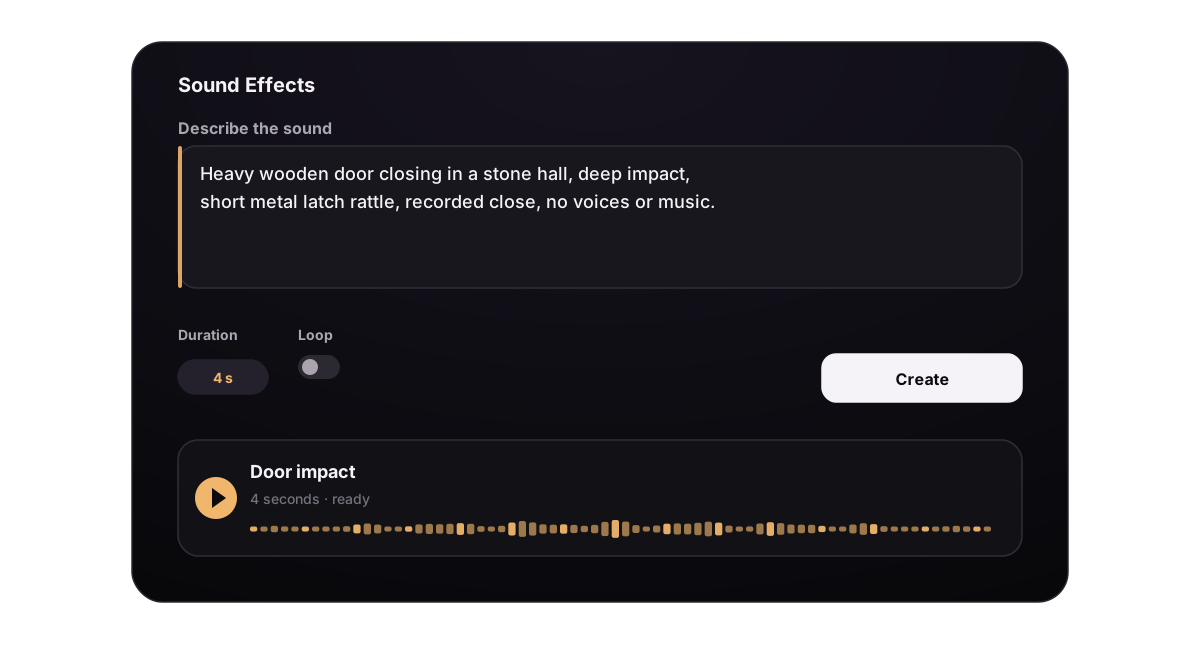
If a prompt produces a full music bed when you wanted one effect, remove genre words and describe the physical event more directly. See Generate Sound Effects for the current controls.
Use Lyrics tags for section changes
Global sound belongs in Style. Put short local directions beside the matching Lyrics section:
[Verse - close and restrained]
City lights fade into rain
I trace your name across the train

[Chorus - wider harmonies]
Carry me home through the blue
Every road still leads to you
Do not add a direction to every line. One short note per section is easier to follow.
Write prompts for an existing song
These actions already have source audio, so describe the change instead of rewriting the entire song:
- Cover: “Keep the melody and timing; change the arrangement to warm acoustic folk with brushed drums and close harmonies.”
- Extend: “Continue the same tempo and instruments, reduce to guitar for a short bridge, then return to a larger final chorus.”
- Edit song section: In Replacement style, describe only the new section. Keep the finished song order in Full lyrics after replacement.
- Add Instruments: Describe the accompaniment you want to add.
- Add Vocals: Supply usable lyrics and describe the vocal delivery.
Fix one problem at a time
- Too generic: add one genre, two key instruments, and a clearer vocal direction.
- Too crowded: remove secondary instruments and extra production words.
- Wrong pace: add a BPM or a plain phrase such as slow, mid-tempo, or fast.
- Weak chorus: state the contrast, such as “quiet verse, wider chorus with harmonies.”
- Wrong ending: ask for a clean stop, fade, sustained chord, or final hit.
Save the working version before editing. A small change gives you a fair comparison; changing the model, prompt, lyrics, duration, and reference together does not.
