Song Prompt Writing Guide
A useful song prompt answers a simple question: what should the listener hear? Describe the music, not how good you want it to be. “Warm piano, slow pulse, close male vocal” gives the model more direction than “a beautiful professional song.”
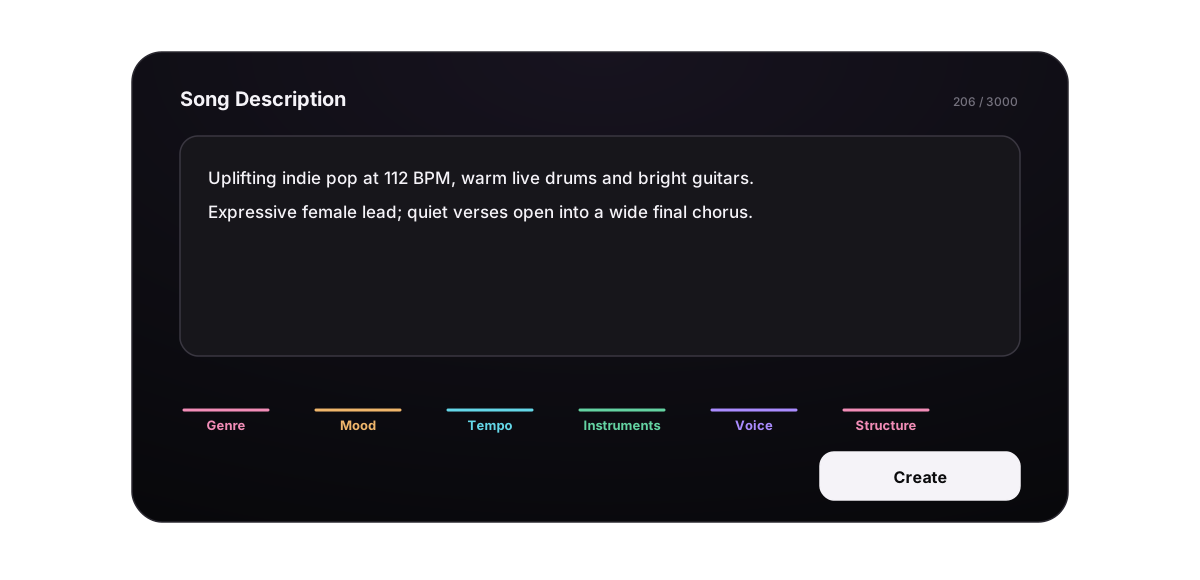
Choose the right place to write
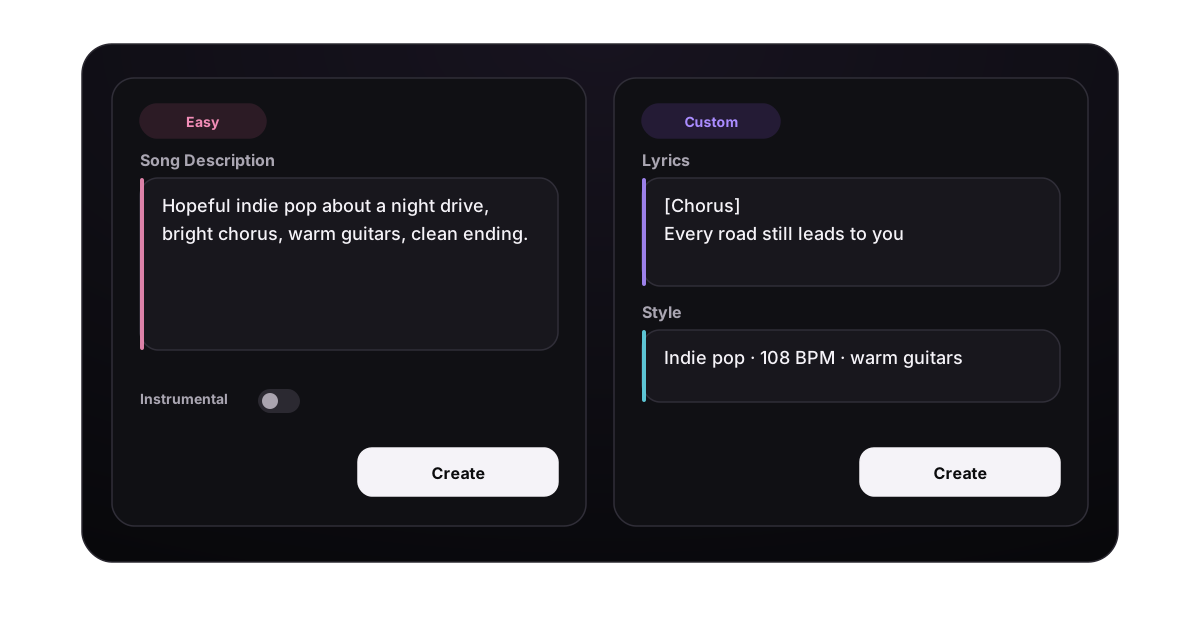
- In Easy, write the whole idea in Song Description: sound, topic, voice, and development.
- In Custom, put the exact words in Lyrics and the musical direction in Style.
- Turn on Instrumental when you do not want vocals.
- Put unwanted sounds in Advanced options → Exclude styles instead of filling the main prompt with “no” or “without.”
Start with Easy when you have an idea but no finished lyrics. Use Custom when the words or musical details must stay under your control.
Build the prompt in seven parts
Use only the parts that matter to your song:
| Part | What to describe | Simple examples |
|---|---|---|
| Genre | The song’s main musical family | indie pop, jazz, folk, film score |
| Mood | The feeling and energy | calm, hopeful, tense, joyful |
| Tempo and rhythm | Speed and movement | 78 BPM, mid-tempo, syncopated, half-time |
| Instruments | The sounds at the front of the mix | piano, live drums, synth bass, strings |
| Voice | Vocal type and delivery | intimate female lead, clear male vocal, group harmonies |
| Structure | How the song changes | quiet verse, larger chorus, short bridge, clean ending |
| Production | The overall sound and space | warm, dry drums, roomy reverb, polished mix |
A practical order is:
[genre], [mood], [tempo/rhythm], [main instruments], [voice], [development], [production and ending]
Example:
Uplifting indie pop at 112 BPM, warm live drums, melodic bass and bright electric guitars, expressive female lead with soft group harmonies, restrained verses opening into a wide final chorus, polished natural mix, clean ending.
You do not need every part. A clear five-part prompt is better than a long list of details that fight each other.
Describe changes in plain language
You do not need music theory to write a good prompt. Describe what a listener should hear. A familiar phrase such as “the chorus gradually becomes louder” is usually more useful than a specialist term.
Tempo and rhythm
| Plain direction | What the listener hears | Prompt fragment |
|---|---|---|
| BPM | A specific overall speed | 92 BPM hip-hop beat |
| Slow | More space between phrases | slow piano ballad with spacious verses |
| Mid-tempo | A moderate, natural pace | mid-tempo acoustic folk |
| Fast | Lively forward movement | fast bright pop-rock |
| Gently changing speed | The performance briefly speeds up or slows down | free-flowing piano intro, then steady drums |
| Off-beat accents | Some accents land between the main beats | funk guitar with playful off-beat accents |
| Broad, heavy beat | The rhythm feels slower and heavier even at a fast BPM | 140 BPM chorus with a broad heavy beat |
| Bouncing rhythm | The beat has an uneven, relaxed bounce | relaxed bouncing rhythm with brushed drums |
If you do not know the BPM, write slow, mid-tempo, or fast and describe the movement: steady, driving, loose, bouncy, or laid-back.
Dynamics and performance
| Plain direction | What it changes | Prompt fragment |
|---|---|---|
| Gradually louder | The music gains volume or intensity | gradually louder into the final chorus |
| Gradually softer | The music settles after a peak | gradually softer after the final vocal line |
| Short, separate notes | Each note ends clearly before the next | short separated string pulses |
| Smooth, connected notes | Notes flow into one another | long smooth cello melody |
| Strong accent | One beat or note receives extra emphasis | strong accents on the main beat |
| Gentle voice movement | A held note moves slightly in pitch | warm lead vocal with gentle movement on long notes |
| Rapid repeated notes | One note or chord repeats quickly | rapidly repeating guitar building tension |
Describe a journey through the song. Soft verse, gradually louder build, powerful final chorus is clearer than asking for the whole song to be both quiet and loud.
Melody, harmony, and texture
| Plain direction | What the listener hears | Prompt fragment |
|---|---|---|
| Bright harmony | A lighter, more positive color | bright hopeful chorus |
| Dark harmony | A moodier color | dark reflective verse |
| Rippling chord notes | Chord notes play one after another | shimmering rippling synth notes |
| Tension, then release | Unsettled sounds later become warm and stable | tense strings settling into warm harmony |
| Repeating pattern | A short musical idea repeats underneath | repeating low-string pattern driving the scene |
| Sparse | Few elements with audible space | sparse piano and close vocal |
| Dense | Many layers sound together | dense final chorus with guitars, strings, and stacked vocals |
| Interweaving melodies | Two melodies move together without becoming one line | two interweaving guitar melodies |
Do not stack sparse and dense as global directions. Attach them to sections: sparse first verse, layered second chorus, dense final chorus.
Vocal delivery and production
| Plain direction | What it suggests | Prompt fragment |
|---|---|---|
| Soft, intimate singing | A close and restrained performance | soft close male vocal in the verses |
| Light high voice | A breathy sound in a higher range | airy high voice in the pre-chorus |
| Powerful sustained singing | A strong vocal peak | powerful sustained final chorus |
| Short vocal runs | Several notes are sung on one syllable | short soulful vocal runs at phrase endings |
| Answering phrases | One voice or instrument answers another | lead vocal answered by a small choir |
| Close and dry | Little audible room sound | close dry vocal and tight drums |
| Roomy or distant | A stronger sense of space | strings in a wide concert-hall space |
| Repeated echo | A word repeats after it ends | subtle echo on the last word of each chorus line |
| Rough tone | A more aggressive sound | slightly rough bass tone |
| Gradually opening tone | The sound becomes brighter or fuller over time | muted intro that opens into the drop |
Ask for only the sound changes that matter. Warm small-room sound is often more useful than listing studio controls without a clear reason.
Put several terms together
These examples combine a few compatible ideas instead of using a glossary as a checklist:
Slow 6/8 soul ballad, sparse piano and warm bass, intimate singing in the verse, gradually building into a powerful final chorus, warm natural room sound.108 BPM funk, bass groove with off-beat accents, short guitar notes, answering brass phrases, short breakdown, tight dry mix and a final hit.Dark cinematic piece, repeating low strings, layered percussion and tense brass rising toward one peak, then gradually becoming softer.
Write changes as a journey
If the song should grow or change, say where it happens:
- “Sparse piano intro, then live drums enter in the first chorus.”
- “Keep the verses intimate; add strings and backing vocals in the final chorus.”
- “Finish on one sustained chord instead of fading out.”
This is clearer than mixing opposite words such as “minimal” and “huge” with no section attached.
Use the Style helpers
In Custom mode:
- Use Quick styles or + More to add common genres, moods, voices, instruments, and tempo ranges.
- Pin tags you use often. Pinning creates a shortcut; clicking the tag adds or removes it from the current Style.
- Use Enhance to expand a short idea. Read the result, remove anything you did not ask for, then apply it. Enhance costs the amount shown in its window.
- Save a useful Style and reuse it from Saved Style.
The active model controls the character limit, so follow the counter shown beside the field.
Keep unwanted sounds in Exclude styles
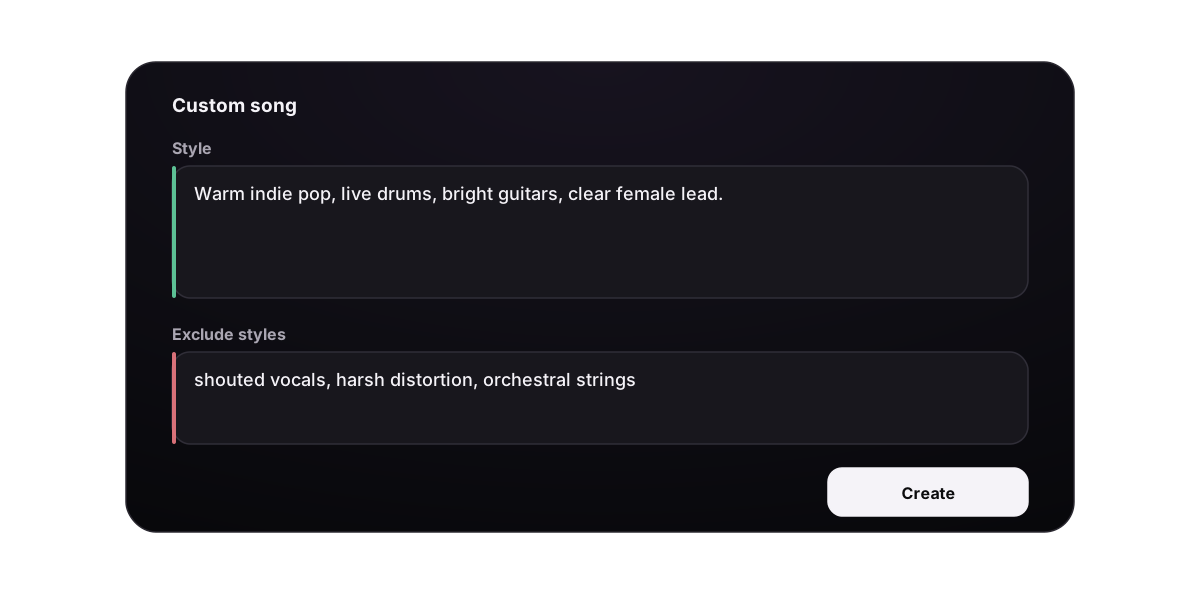
In Custom mode, open Advanced options, then enter a short list in Exclude styles.
- Keep the sound you want in Style.
- List only the unwanted instruments, voices, genres, or production qualities in Exclude styles.
- Use clear items separated by commas.
- Create, listen, and add another exclusion only when you can hear a repeated problem.
For example, keep “warm indie pop, live drums, clear female lead” in Style, then put “shouted vocals, harsh distortion, orchestral strings” in Exclude styles. Avoid broad words such as “bad,” because they do not name an audible problem.
Improve a result without starting over
Listen once, find the largest mismatch, and change only the matching part:
| What went wrong | What to change |
|---|---|
| The style feels unclear | Put one main genre first and remove unrelated genres |
| The track is too busy | Keep fewer lead instruments and ask for a sparse arrangement |
| The vocal feels wrong | Clarify vocal type, tone, language, or delivery |
| The chorus feels flat | Describe how it should differ from the verse |
| An unwanted sound appears | Add that sound to Exclude styles |
| The ending feels unfinished | Ask for a clean ending, final hit, or sustained chord |
Keep the parts that already work. Save the prompt before making a new version, then compare the two results.
For copy-ready formulas and full examples, continue to Prompt Structure and Examples.
